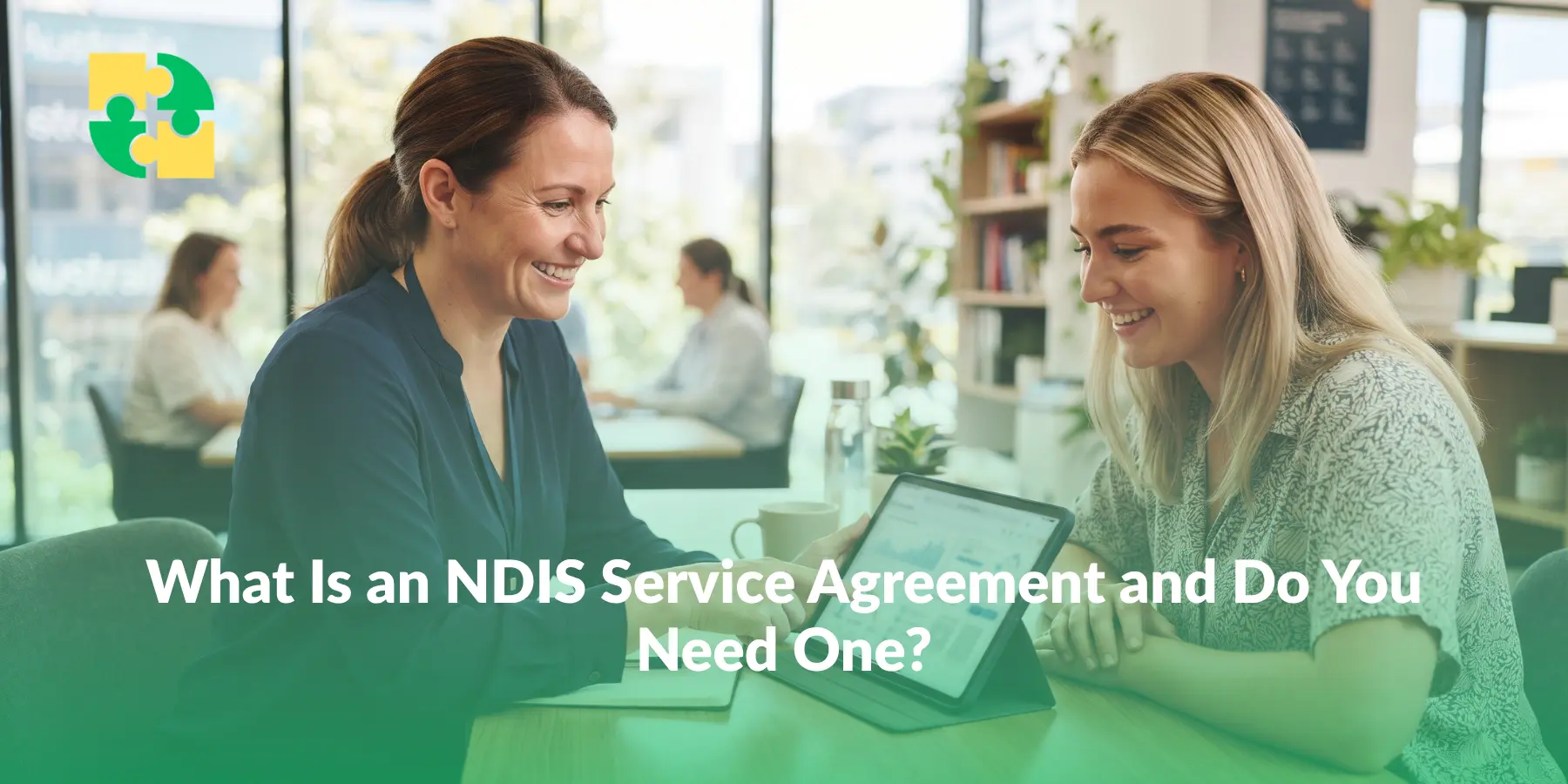



An NDIS service agreement is a written agreement between you and your provider. It explains what NDIS supports you’ll receive, how and when they’ll be delivered, what they cost, how payment will work, and what happens if something changes.
Do you need one? In most cases, the NDIS does not require you to have a written service agreement with an ordinary provider. However, the NDIS recommends creating one whenever you start working with a new provider. A written service agreement is required for Specialist Disability Accommodation (SDA).
Your provider may also have a business policy requiring you to sign an agreement before services begin. That’s different from a general NDIS requirement.
Having a written agreement gives you and your provider a clear record of what you’ve agreed to and can help prevent misunderstandings about services, prices, cancellations and responsibilities.
What Is an NDIS Service Agreement?
Think of a service agreement as a written record of the arrangement between you and your provider.
It explains what you’ve agreed about your NDIS supports, including:
- What support you’ll receive
- How the support will be delivered
- When and where it will be delivered
- How much it will cost
- How the provider will be paid
- What happens if you need to change or cancel the service
- How either side can end the agreement
The NDIS says providers should support participants to understand their service agreements. You can ask for the agreement in a language, communication method or format that you understand.
You can also ask someone you trust to help you understand it before signing. This could be a family member, friend, support coordinator, recovery coach, advocate or another person who helps you manage your NDIS support.
Is an NDIS Service Agreement Mandatory?
Usually, no.
For most NDIS supporters, you aren’t generally required to have a written service agreement. The NDIS recommends having one whenever you start working with a new provider.
There is an important exception: you must have a written service agreement if you receive Specialist Disability Accommodation (SDA).
A provider can also choose to have a business policy requiring a signed agreement before they start providing services. If that’s the case, ask the provider to explain their terms before agreeing to start.
Even when an agreement isn’t mandatory, having one can be useful because you have something to refer back to if there is a disagreement about services, prices, cancellations or responsibilities.
What Should Be in an NDIS Service Agreement?
A good service agreement should clearly explain the arrangement between you and your provider.
1. Who’s Involved
The agreement should identify you and the provider, along with any relevant nominee, representative or other person involved in managing your support.
2. What Supports You’ll Receive
The agreement should explain:
- What supports or services you’ll receive
- How they’ll be delivered
- When and where they’ll be delivered
- Who will provide the support, where relevant
It should be clear enough that you can understand exactly what you’re agreeing to.
3. Costs and Payments
The agreement should clearly explain the costs, including where relevant:
- The price of the support
- Materials or product costs
- Provider travel costs
- Other fees or charges
- Whether GST applies
- How the provider will be paid
It should also explain whether payment will be made by you, through a plan manager, or through claims made under an NDIA-managed plan.
4. Your Responsibilities and the Provider’s Responsibilities
Both sides should understand what they’re responsible for.
For example, the agreement may explain your responsibilities around appointments, communication and cancellations. It may also explain the provider’s responsibilities when delivering your agreed support.
5. Cancellation Rules
This is one section worth reading carefully.
Your agreement should explain how much notice you need to give if you cancel a service and whether a cancellation fee could apply.
Cancellation fees aren’t simply whatever a provider chooses to charge. Where NDIS pricing rules apply, those rules set conditions around when cancellation fees can be claimed.
6. Changing or Ending the Agreement
The agreement should explain:
- How changes can be requested
- How changes are agreed
- How either side can end the agreement
- How much notice is required
- Whether any cancellation or exit arrangements apply
The NDIS recommends keeping service agreements up to date, particularly when your supports or circumstances change.
7. Complaints and Disagreements
A good agreement should explain what to do if you’re unhappy with the service or something goes wrong.
It should tell you how to raise concerns with the provider and what you can do if the issue isn’t resolved.
If you can’t resolve the issue with the provider, you can contact the NDIS Quality and Safeguards Commission about a complaint concerning an NDIS provider or worker.
8. Privacy and Consent
The agreement may also explain how your personal information will be handled and what consent you’re giving the provider.
Before signing, make sure you understand what information you’re agreeing to share, why it’s being collected and how it may be used.
Why Is an NDIS Service Agreement Worth Having?
A service agreement can give you and your provider a shared understanding of what you’ve agreed to.
It can help you understand:
- What support you’re receiving
- How much it costs
- When support will be delivered
- What happens if you cancel
- How changes are made
- How the agreement can be ended
- What to do if there’s a disagreement
It can also give you something to refer to if a provider does something you didn’t agree to, such as charging a different amount from what was agreed.
For people who self-manage or plan-manage their funding, keeping clear written records can also help with invoices and tracking NDIS spending.
NDIS Service Agreement vs Service Booking
These two terms are easy to confuse, but they’re not the same thing.
An NDIS service agreement is an agreement between you and your provider. It explains the terms of your support arrangement.
A service booking is a different funding mechanism associated with NDIA-managed funding. It relates to setting aside funding for particular support from a registered provider.
The two should not be treated as interchangeable.
The way providers are paid depends on how your NDIS funding is managed and the systems that apply to your plan. For example, NDIA-managed providers make claims through the NDIS system, while plan-managed participants have a plan manager handle invoices and payments. Self-managed participants are responsible for managing payments and keeping appropriate records.
What About NDIA-Managed, Plan-Managed and Self-Managed Funding?
Your funding-management type can affect how providers are paid and which providers you can use.
NDIA-Managed
If your funding is NDIA-managed, providers generally claim payment through the NDIS system. You generally need to use registered NDIS providers for your support.
Plan-Managed
If your plan is plan-managed, your plan manager handles invoices and payments according to your arrangement with them.
You also need a service agreement with your plan manager. It should explain the supports they’ll provide, how they’ll provide them, how long they’ll provide them for and how much they cost.
Self-Managed
If you self-manage your NDIS funding, you’re responsible for managing payments and keeping records of how you spend your NDIS funds.
The rules about which providers you can use can also depend on the type of support you’re receiving, so check the current NDIS guidance if you’re unsure.
NDIS Pricing and Service Agreement Costs
There isn’t a general NDIS fee simply for creating a standard service agreement.
However, the agreement may include costs for the actual support, travel, cancellations, materials or other agreed services.
For the 2026–27 financial year, the NDIS pricing schedules set maximum prices for applicable NDIS supports. These maximum prices apply to NDIA-managed and plan-managed participants. Providers cannot charge more than the applicable maximum price limits for those supports. Participants and providers can negotiate an appropriate price up to the applicable maximum.
When reviewing your service agreement, ask your provider about:
- Support rates
- Travel charges
- Cancellation fees
- Materials or other costs
- GST, if applicable
- Any other fees or charges
Don’t assume that every cost mentioned by a provider can automatically be paid from your NDIS funding. The cost must also meet the applicable NDIS rules.
How to Set Up an NDIS Service Agreement
Setting up an agreement doesn’t have to be complicated.
1. Choose a Provider
Take your time to find a provider who understands your needs and can deliver the support you want.
If your funding is NDIA-managed, you’ll generally need to use registered providers. With plan-managed or self-managed funding, you may have more choice, although some supports have specific provider requirements.
2. Ask for a Draft Agreement
Your provider may have a standard service agreement template.
Ask them to explain anything you don’t understand. You don’t have to sign an agreement simply because a provider has given you its standard terms.
The NDIS says you can suggest changes to make the agreement better suit your needs.
3. Check the Important Details
Pay particular attention to:
- Services and support hours
- Prices
- Travel costs
- Cancellation rules
- Notice periods
- How changes are made
- How the agreement can be ended
- Complaints procedures
- Payment arrangements
4. Ask for Changes if Needed
Don’t feel pressured to sign an agreement you don’t understand.
You can discuss changes with the provider before signing.
If you and the provider can’t agree on the terms, you don’t have to work with that provider.
5. Ask for Accessible Information
If you need Easy Read information, large print, translation or another communication format, ask the provider.
The NDIS says service agreements should use language and communication methods that the participant can understand.
6. Sign and Keep a Copy
Once you’re happy with the agreement, sign it and keep a copy somewhere safe.
You may also want to share a copy with your plan manager or support coordinator if they’re involved in managing your support.
What Should You Check Before Signing?
Before signing, ask yourself:
- Do I understand exactly what support I’m receiving?
- Do I understand how much it costs?
- Are travel and other charges clearly explained?
- What happens if I cancel?
- How much notice do I need to give?
- Can the provider change the price?
- How can I change or end the agreement?
- What happens if I’m unhappy with the service?
- Do I understand how my information will be used?
- Does the agreement match what I actually discussed with the provider?
- Do I know how long the agreement lasts and when it will be reviewed?
If the answer to any of these questions is “I’m not sure”, ask the provider before signing.
Can You Change or Cancel an NDIS Service Agreement?
Yes. Your agreement should explain how changes are made and how either side can end the arrangement.
If you’re thinking about changing providers, check your current service agreement first. It should tell you how much notice you need to give. A fee may apply if you don’t provide the agreed notice, subject to the applicable NDIS pricing rules.
You can change providers if you’re unhappy with your current provider. The NDIS says you can change providers at any time.
Where possible, it can be useful to arrange your new provider before ending your current service so you don’t accidentally create a gap in your support.
What If Something Goes Wrong?
If you have a problem with your provider, you can start by raising the issue with them directly.
You can ask someone you trust, such as a support coordinator, family member, advocate or plan manager, to support you with the conversation.
If the issue isn’t resolved, you can make a complaint to the NDIS Quality and Safeguards Commission.
Keep relevant documents, messages, invoices and other records that may help explain what happened.
You don’t have to handle a difficult provider relationship on your own.
Conclusion
An NDIS service agreement is more than just paperwork. It’s a practical way to make sure you and your provider have the same understanding about your support, costs, responsibilities and what happens if something changes.
For most NDIS supporters, a written service agreement isn’t generally mandatory, but the NDIS recommends having one whenever you start working with a new provider. For SDA support, a written service agreement is required.
Before signing, take your time, check the prices and cancellation terms, ask questions, and make sure the agreement is written in a way you understand.
Most importantly, remember that you have a say in who provides your support and can change providers if your current arrangement isn’t working for you.
Disclaimer:This article provides general information and isn’t legal or financial advice. NDIS rules, legislation and pricing arrangements can change. This article was checked against NDIS guidance available on 24 September 2026. Always check the latest information on the official NDIS and NDIS Quality and Safeguards Commission websites, or speak with your NDIS contact, plan manager, support coordinator or an appropriately qualified adviser about your individual circumstances.
Frequently Asked Questions
- Is an NDIS service agreement legally binding?
A signed service agreement can create agreed terms between you and your provider, but its exact legal effect depends on the wording of the agreement and the circumstances.
If you have a serious legal concern about an agreement, consider getting independent legal advice before signing or taking action.
- Is an NDIS service agreement mandatory?
Not for most ordinary NDIS supporters. The NDIS recommends having a written agreement when you start with a new provider.
A written service agreement is required for SDA support.
- Can a provider refuse to work with me without a service agreement?
A provider may have a business policy requiring a signed agreement before services begin.
If this happens, ask the provider to explain its requirements and make sure you understand the terms before agreeing.
- Does an NDIS service agreement cost anything?
There isn’t a general NDIS fee simply for creating a standard service agreement.
However, the agreement may include fees for the support or services you’re receiving, so check the document carefully.
- How long does an NDIS service agreement last?
There isn’t one standard length for every agreement.
Your agreement should explain how long it lasts and when it will be reviewed. The NDIS recommends keeping agreements up to date, including when you receive a new plan or start receiving new support.
- Can I have more than one service agreement?
Yes. You can have separate service agreements with different providers.
- Do I need a new service agreement when I get a new NDIS plan?
The NDIS recommends creating new service agreements with your providers when you receive a new plan, particularly if your supports, goals or circumstances have changed.
- Can I change providers?
Yes. You can change providers if you want to.
Before ending your current arrangement, check the service agreement for the required notice period and any applicable cancellation arrangements.