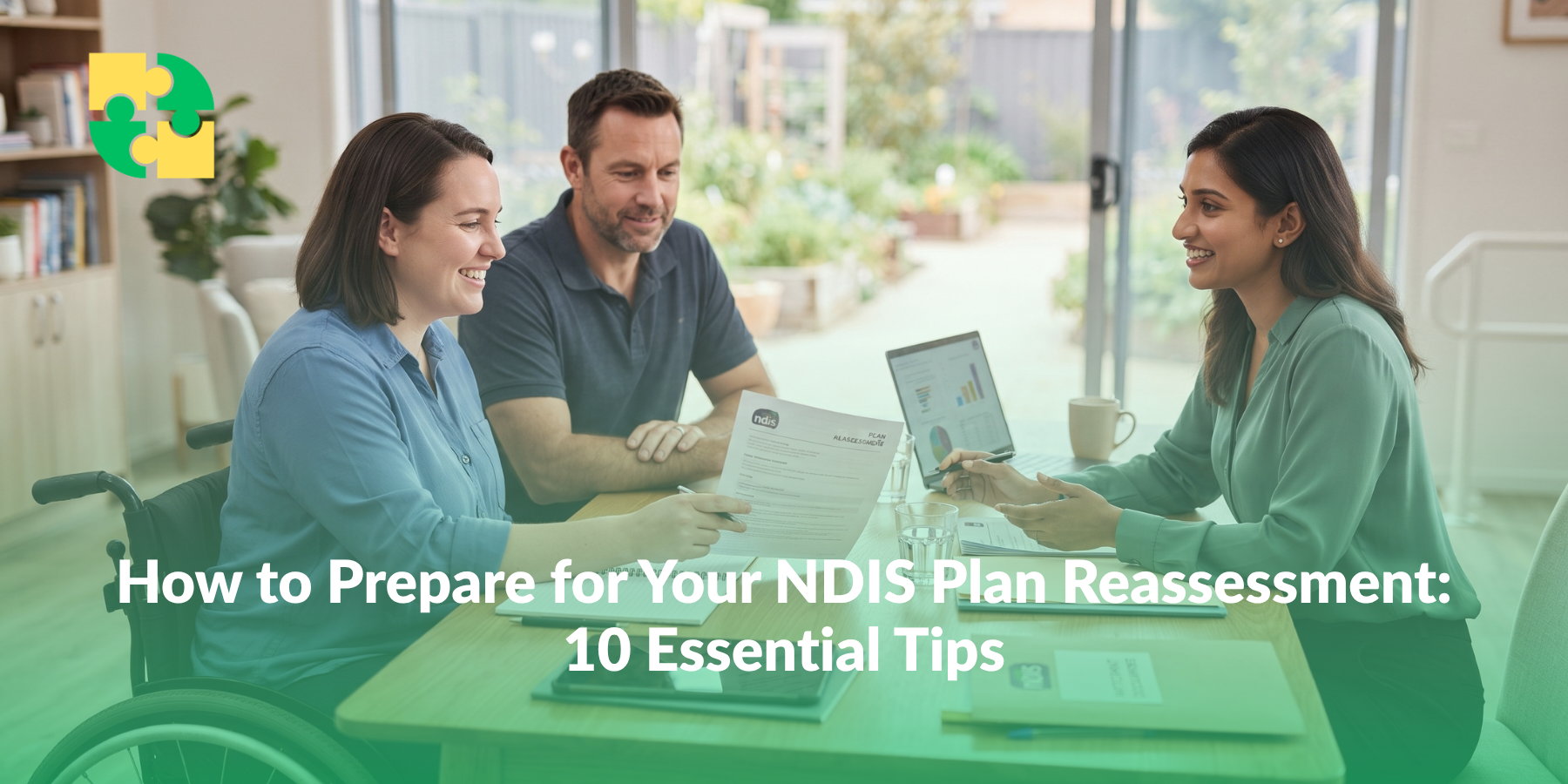




Start preparing early, gather up-to-date evidence, and be ready to explain how your current supports have helped and what has changed in your life. Review your goals, check how you’ve used your funding, request recent reports from your providers, and make a clear list of the supports you need and why.
An NDIS plan reassessment, sometimes referred to as a plan review, can feel stressful, particularly when you’re thinking about your future support needs. However, it can be much easier when you approach it as a conversation about your current circumstances, goals, and support needs rather than as a test.
Here are 10 practical steps to help you prepare.
1. Start Preparing Early
Don’t wait until the last minute to get organised. Start preparing as early as you can, particularly if you need updated reports from therapists, doctors, or other providers.
Giving yourself plenty of time allows you to:
- Request recent reports and supporting evidence
- Review your current plan
- Think about changes in your circumstances
- Consider your goals for the next plan period
- Identify any gaps in your current supports
Early preparation can also give you more time to follow up if a provider or organisation needs additional information.
2. Review Your Current plan
Go through your current plan and think about what has happened since it started.
Ask yourself:
- Which goals have I made progress towards?
- Which supports have been helpful?
- Are there supports that haven’t worked as expected?
- Are my current supports meeting my needs?
- Have my circumstances or support needs changed?
Keeping notes about these questions can help you explain your situation clearly during the reassessment.
3. Review Your Funding and Support Usage
Look at how you’ve used the funding available in your current plan and consider whether your actual support needs matched the original plan.
If you haven’t used all of your funding, think about why. For example, you may have experienced provider shortages, waitlists, changes in circumstances, or difficulty finding a suitable service.
Likewise, if your support needs were greater than expected, keep records that help explain what changed and why additional support was needed.
The aim isn’t simply to show how much funding was spent. It’s to help provide an accurate picture of how your supports have been used and whether your current plan continues to meet your needs.
4. Request Updated Reports From Your Providers
Recent, relevant evidence can help explain your current abilities, challenges, and support needs.
Depending on your circumstances, you may ask relevant providers for updated reports covering areas such as:
- Your current abilities and challenges
- Progress since your previous plan
- Changes in your circumstances or functional needs
- Supports that have been helpful
- Supports they recommend
- The frequency or level of support recommended
- The reasons for those recommendations
Specific information is generally more useful than broad statements. For example, a report that explains how a particular support assists you with daily activities can provide more context than a general statement that you require support.
5. Write Down What Has Changed
Your circumstances may change during a plan period. Before your reassessment, make a list of any significant changes that may affect your support needs.
Consider changes involving:
- Your disability or functional needs
- Your living arrangements
- Your family or informal supports
- Your work or study
- Your daily routines
- Your ability to manage everyday activities
If your circumstances have changed significantly, check whether you may be able to request a change or review before your scheduled reassessment rather than waiting.
6. Revisit and Refine Your Goals
Your goals don’t have to remain exactly the same from one plan to the next.
Think about what you want to achieve now and whether your previous goals still reflect your priorities.
Try to make your goals:
- Personal
- Clear
- Meaningful
- Relevant to your current circumstances
For example, instead of a broad goal such as “improve life skills” you might describe a specific outcome such as “increase my ability to prepare simple meals independently.”
Clear goals can make it easier to explain how particular supports relate to what you want to achieve.
7. Make a List of the Supports You Need and Why
Before the reassessment, write down the supports you currently receive and any additional supports you believe you may need.
For each support, consider:
- What is the support?
- How often do you need it?
- What does it help you do?
- Which goal does it relate to?
- What evidence supports the need for it?
- What has happened when the support wasn’t available?
The NDIS considers whether supporters meet its funding requirements, including whether they are reasonable and necessary. Clear evidence and an explanation of your circumstances can help decision-makers understand your request.
8. Keep a Simple Record of Your Day-to-Day Needs
It isn’t always easy to remember everything during a meeting. A simple diary or notes app can help you record relevant examples over several weeks.
You might record:
- Tasks you find difficult
- What assistance you needed
- How frequently you needed assistance
- How long particular tasks took
- Situations where your usual supports weren’t available
- How your disability affected everyday activities
These real-life examples can help you describe your support needs more clearly than general statements alone.
9. Consider Bringing a Support Person
You don’t necessarily have to attend the reassessment alone.
Depending on your circumstances, you may choose to have a family member, friend, support person, support coordinator, or advocate assist you.
They may be able to:
- Take notes
- Help you remember important information
- Help you explain your needs
- Provide emotional or practical support
If you need independent assistance, you can also look into disability advocacy services that may be available in your area.
You can also ask about the available meeting format, such as phone, video, or in-person options, and discuss any accessibility requirements you have.
10. Be Honest, Clear, and Prepared for Follow-Up
During the reassessment, try to describe your circumstances as accurately as possible. Explain both what you can do independently and where you need assistance.
If your needs vary, explain that variation and how often you experience it. Specific examples can help provide a clearer picture of your everyday support requirements.
After the meeting, keep copies of reports, correspondence, and other documents you submitted.
If you receive a decision that you believe does not properly reflect your circumstances or support needs, there may be review options available. The appropriate process and time limits can depend on the type of decision, so check the current information provided by the NDIS or seek appropriate assistance.
A Quick NDIS Reassessment Checklist
Before your reassessment, make sure you’ve considered:
- Review your current plan and goals
- Review your support and funding usage
- Request recent provider reports
- Note important changes in your circumstances
- Update your goals
- Make a list of the supports you need and why
- Keep examples of your day-to-day support needs
- Arrange a support person or advocate if helpful
- Keep copies of important documents
- Check the current NDIS review process and requirements
Conclusion
Preparing for an NDIS plan reassessment is about providing a clear and accurate picture of your current circumstances, goals, and support needs.
Start early, collect relevant evidence, review what has worked, and make a note of anything that has changed. Most importantly, be specific and honest about the support you need in your everyday life.
Good preparation can help you feel more organised and make it easier to communicate your needs during the reassessment process.
Note: NDIS processes, terminology, and review requirements can change. Before publishing or relying on this information, check the latest guidance on the official NDIS website or speak with your support coordinator, advocate, or another appropriately qualified professional.
FAQs
When should I start preparing for my NDIS plan reassessment?
Aim to start 2-3 months before your plan ends. That gives you time to book appointments and request updated reports from your providers.
What should I bring to my reassessment?
Bring recent provider reports, notes on how you’ve used your funding, your updated goals, and a list of the supports you need and why.
Can someone come with me to the meeting?
Yes. A family member, friend, support coordinator, or advocate can attend to take notes and help you explain your needs.
What if I disagree with my new plan?
You can ask for an internal review. Check the NDIS website for the current deadline and process.