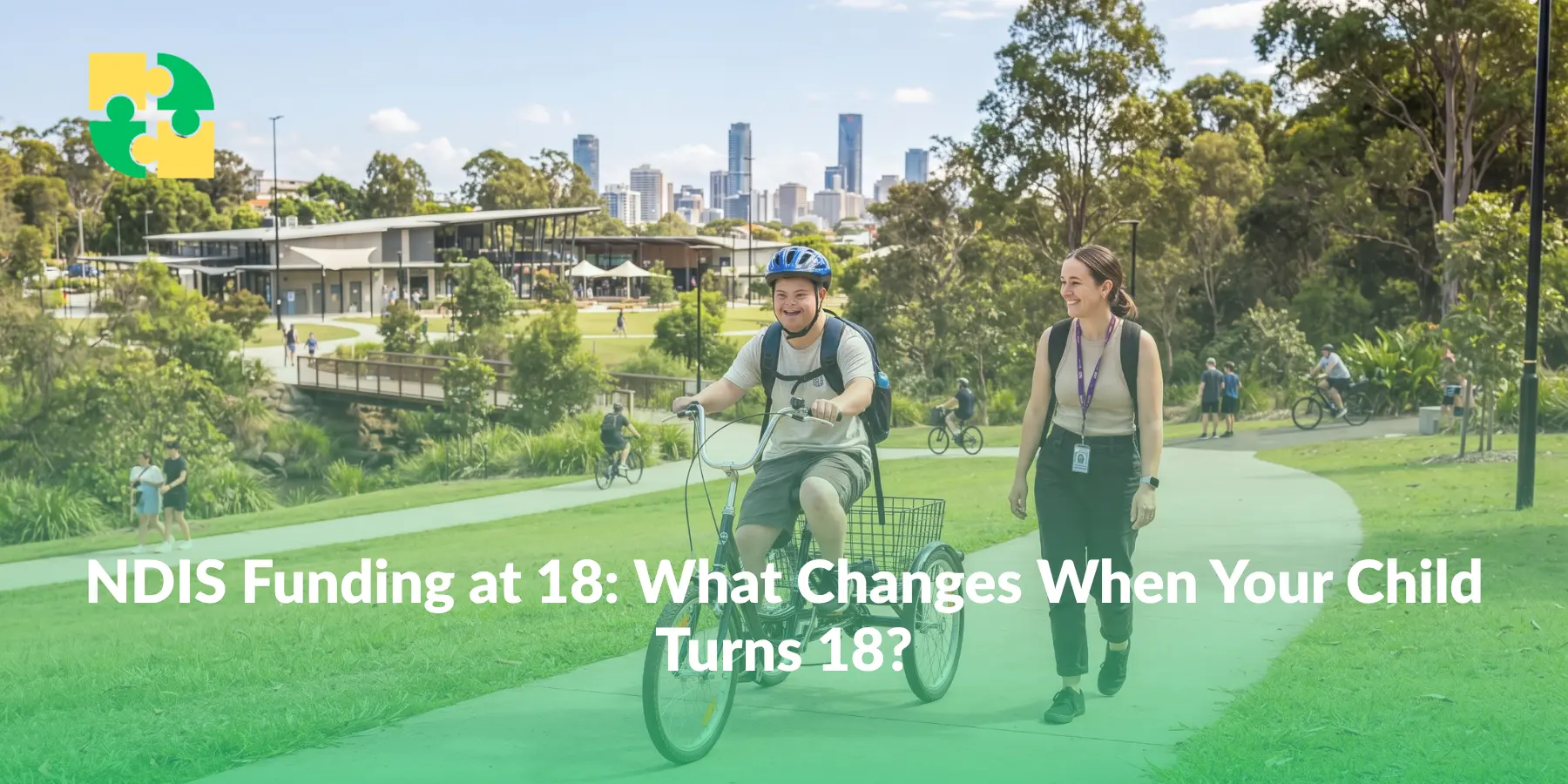




If you’re a parent approaching your child’s 18th birthday and wondering, “Will their NDIS funding just disappear or change overnight?”. The short answer is no. Turning 18 does not automatically mean NDIS funding stops. However, it can bring important changes to how the plan is managed, who can make decisions, and how supports are considered.
The biggest shift is that your child becomes an adult participant. Their NDIS plan and support can also be reviewed with their changing needs and adult-life goals in mind. For families, the key is preparing for the transition early rather than waiting until the birthday arrives.
The Big One: Your Child Becomes Their Own Decision-Maker
Before 18, parents or other legally recognised representatives commonly manage NDIS matters on behalf of a child. Once a participant turns 18, they are generally treated as an adult and can make their own decisions about their NDIS plan, provided they have the capacity to do so.
This means the NDIA, plan manager and support providers may need to communicate directly with your young adult rather than automatically dealing with you as their parent.
That doesn’t mean parents suddenly have to step out of the picture. It means the young person’s preferences, decision-making capacity and chosen level of family involvement become much more important.
How Families Can Stay Involved
There are several ways a family member or another trusted person can continue to support an adult participant.
Consent and information access.
Your young person can give permission for you to receive information or communicate with the NDIS on their behalf. This can be appropriate when they are able to make their own decisions but would like help navigating the system.
A nominee arrangement.
In some circumstances, the NDIA can appoint a nominee to act or make decisions for a participant. This is a more formal arrangement and may be appropriate where a participant needs significant assistance with decision-making.
The right arrangement depends on the individual’s circumstances and decision-making capacity. It is therefore worth discussing family involvement with the NDIA before the 18th birthday rather than assuming existing arrangements will continue unchanged.
Funding Doesn’t Automatically Stop, But the Plan May Change
Turning 18 does not mean a participant automatically starts again from zero. However, the transition to adulthood can be an important point for reviewing whether the person’s current supports and goals still reflect their needs.
The focus may increasingly include areas such as employment, further education or training, living arrangements, transport, relationships, independence and community participation.
This is a useful opportunity to ask a bigger question: What does a good adult life look like for my child, and do their current supports help them move towards it?
A plan designed around the needs of a younger child may not fully reflect the priorities of an 18-year-old, even when their disability and support needs have remained broadly the same.
The NDIS may contact participants and families ahead of an upcoming plan review or reassessment. However, families should not rely on receiving a particular amount of notice. Starting preparations well before the 18th birthday gives you more time to consider goals, supports and decision-making arrangements.
What to Prepare Before the Birthday
A few practical steps can make the transition easier:
- Discuss decision-making and family involvement early.
Work out how much support your young person wants from you and whether any formal arrangement is needed.
- Think about adult-life goals.
Consider employment, study, living arrangements, transport, social participation and greater independence.
- Review current supports and providers
Check whether existing services remain appropriate as your child moves from paediatric or child-focused services into adult support.
- Gather relevant information.
Keep useful reports and evidence about your young person’s functional capacity, support needs and goals organised for future planning discussions.
- Talk openly with your young person.
Turning 18 is not only an administrative change. It is also an important opportunity for them to have a stronger voice in decisions about their future.
A Note on Wider NDIS Changes
The transition to adulthood is happening alongside broader changes to the NDIS, so families should consider both issues separately.
Government reforms are changing how the NDIS operates, including changes affecting how supports and funding are assessed and managed. Some reforms are being introduced progressively, meaning their impact can depend on an individual’s circumstances and when their plan is reviewed or changed.
There are also broader changes affecting how support is provided to children and families, including the introduction of new early-intervention approaches. These initiatives are separate from the specific process of a young person turning 18 and should not be confused with the adult transition.
Because NDIS policy and implementation arrangements are continuing to evolve, families should check the latest information from the NDIA and Australian Government before relying on specific dates, funding rules or reform timelines.
Conclusion
Turning 18 on the NDIS is not simply about funding disappearing. It is a transition from childhood arrangements to adult participation, with greater emphasis on the young person’s own decisions, goals and preferences.
The most useful thing families can do is prepare early: understand how decision-making will work, clarify how the family will stay involved, review current supports and start thinking about what the young person wants their adult life to look like.
With those conversations started before the 18th birthday, the transition can be much more manageable, and the new plan can be shaped around the person’s needs and goals as an adult.
Frequently Asked Questions
1. Does NDIS funding stop when a child turns 18?
No. Turning 18 does not automatically stop NDIS funding. However, the participant’s plan and support may be reviewed to make sure they reflect their needs and goals as an adult.
2. Can parents still manage their child’s NDIS plan after they turn 18?
Parents can remain involved, but their involvement is not automatically the same as it was before 18. Depending on the young person’s circumstances, consent or a formal nominee arrangement may allow a parent to continue helping with NDIS matters.
3. Does an NDIS plan change automatically when someone turns 18?
Not necessarily. Turning 18 can be an important point for reviewing a plan, but changes depend on the participant’s circumstances, needs, goals and the NDIS planning process.
4. What should parents do before their child turns 18?
Families should discuss decision-making arrangements, review current supports, identify adult-life goals and consider whether existing providers remain suitable for the transition into adulthood.
5. Can an 18-year-old choose how much their parents are involved in their NDIS plan?
Yes. An adult participant can have a say in who supports them and how their information and NDIS matters are managed. The specific arrangements depend on their decision-making capacity and circumstances.