


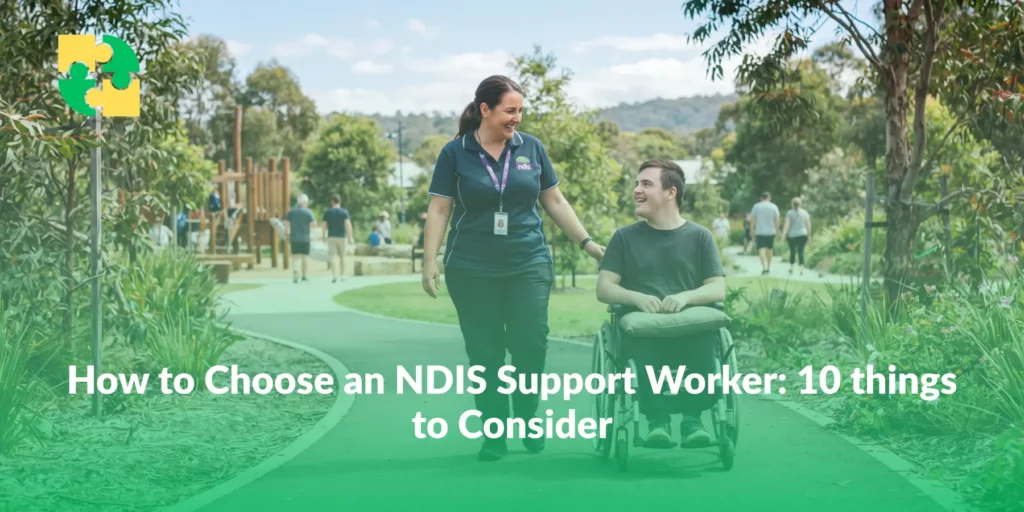
Choosing an NDIS support worker is an important decision. After all, this is someone who may become a regular part of your daily life. They might help with personal care, household tasks, transport, appointments, shopping, social activities, or building everyday skills and independence.
So, how do you know whether a support worker is actually right for you?
The answer is not simply to choose the person with the most experience or the lowest hourly rate. A good support worker should understand your needs, respect your choices, communicate well, and make you feel safe and comfortable.
The NDIS gives participants choice and control over who delivers their support. You can generally choose the providers and workers you want to work with, provided the support is appropriate for your plan and funding arrangements.
But having choices can sometimes make the decision feel overwhelming.
This guide explains 10 important things to consider when choosing an NDIS support worker, so you can approach the process with confidence and find someone who fits your needs, preferences and goals.
1. Understand the Type of Support You Actually Need
Before searching for a support worker, take some time to understand what kind of support you need.
This sounds obvious, but it is one of the most important steps. A support worker who is excellent at helping someone with community participation may not necessarily be the right person for someone who needs assistance with personal care or more specialized support.
NDIS support workers can assist with a range of activities depending on a participant’s goals, needs and funding. This may include household tasks, personal care, daily activities, transport, community participation and developing everyday skills.
Start by asking yourself:
- What do I need help with?
- How often do I need support?
- Do I need help at home, in the community, or both?
- Do I need assistance with personal care?
- Do I need support attending appointments?
- Do I want help developing particular skills?
- Do I need someone who understands a specific disability or condition?
- What are my short-term and long-term goals?
For example, one person may simply need assistance with shopping and attending community activities. Another person may require regular help with personal care and daily routines.
Being clear about your needs makes it much easier to find someone with the right skills and experience.
It also helps you explain your expectations during the first conversation with a potential support worker.
2. Look at Their Experience and Skills
Experience matters, particularly when your support needs are specific.
A support worker does not necessarily need to have years and years of experience to be good at their job. However, they should have the appropriate skills, understanding and attitude for the support you require.
Ask potential support workers about their previous experience.
For example, you might ask:
“Have you supported people with similar needs before?”
You can also ask what type of support they have provided in the past.
If you need assistance with personal care, ask whether they are comfortable providing that type of support. If you want help becoming more independent, ask whether they have experience supporting people to develop everyday skills rather than simply doing everything for them.
The right worker should understand the difference between supporting someone and taking over.
For many participants, the goal isn’t just to have someone complete tasks for them. It may be about becoming more confident and independent over time.
The NDIS describes support workers as people who can help participants develop skills and work towards their goals.
That distinction is worth remembering when interviewing potential workers.
3. Check Worker Screening and Safety Requirements
Feeling safe with your support worker should be a priority.
One of the practical things to check is whether the worker has completed the appropriate NDIS worker screening requirements.
The NDIS recommends making sure support workers have completed an NDIS worker screening check. The screening process is designed to assess whether a person is suitable to work with people with disability.
Don’t be uncomfortable asking about this.
You can politely say:
“Can you tell me about your NDIS worker screening status?”
If you are working through a provider organisation, you can also ask the organisation what checks and safety procedures it has in place.
Safety is about more than paperwork, though.
Pay attention to how the worker communicates with you. Do they listen? Do they respect your personal space? Do they take your concerns seriously? Do they understand boundaries?
A person may have all the required checks and qualifications, but you should still feel comfortable with them as an individual.
Trust your instincts.
If something doesn’t feel right, you do not have to continue with that worker simply because they have experience or were recommended by someone else.
4. Make Sure Your Personalities and Communication Styles Match
This is one of the things people sometimes overlook.
You could find a highly experienced support worker who looks perfect on paper but simply isn’t a good personality match for you.
Remember that you may spend several hours with this person every week. You might be talking to them about personal matters, attending appointments together, going shopping or participating in community activities.
You need to feel comfortable communicating with them.
Think about your preferred communication style.
Do you prefer someone who is:
- Quiet and calm?
- Friendly and talkative?
- Very organised?
- Patient and relaxed?
- Energetic and outgoing?
- Direct and clear?
- Familiar with your communication preferences?
There isn’t a universally “best” personality for a support worker.
The best person is someone whose communication style works well for you.
The NDIS recognises that participants can choose how they communicate with providers, including in person, by phone, online or by email.
During an initial meeting, don’t just focus on their qualifications. Notice how the conversation feels.
Do they give you enough time to speak?
Do they interrupt?
Do they ask questions about your preferences?
Do they seem genuinely interested in understanding your goals?
These small details can tell you a lot.
5. Consider Their Availability and Reliability
Even the perfect support worker isn’t useful if their availability doesn’t match your schedule.
Before agreeing to work together, discuss exactly when you need support.
For example:
- Which days are you available?
- What hours can you work?
- Can you provide support on weekends?
- What happens if you are sick?
- How much notice do you need for changes?
- Are you available during school holidays or public holidays if required?
- What happens if I need additional support occasionally?
Reliability is particularly important because participants may organise appointments, activities and routines around their support worker’s schedule.
Ask about their approach to cancellations.
If they work through an organisation, ask about the organisation’s cancellation and replacement-worker policies.
It’s also worth asking what happens if your regular worker is unavailable.
Will another worker automatically be sent?
Will you be contacted first?
Can you refuse a replacement if you don’t feel comfortable with them?
Having these conversations early can prevent misunderstandings later.
6. Think About Cultural Understanding and Personal Preferences
Good support is personal.
Your cultural background, language, routines, communication style and personal preferences may all influence how comfortable you feel with a support worker.
For some people, having a worker who understands their cultural background can make communication easier.
For others, language compatibility may be particularly important.
You may also have preferences about things such as gender, communication style, food, routines, privacy or community activities.
There is nothing wrong with discussing these preferences.
In fact, it is better to be clear from the beginning than to discover later that important expectations don’t match.
The NDIS emphasises participant choice and control, including the ability to choose who delivers support and how those supports are provided.
Your support should fit into your life — not force your life to fit around someone else’s preferences.
7. Discuss Costs and Your NDIS Funding
Money is another important consideration.
Before starting support, make sure you understand what the worker or provider charges and how the payment will work.
Your funding arrangement can affect which providers you can use.
For example, participants with NDIA-managed funding generally need to use registered providers. Participants who self-manage or have plan-managed funding can usually choose between registered and unregistered providers, although there are exceptions for certain supports.
This is why it is important to understand your own NDIS plan and funding arrangement before agreeing to services.
Ask questions such as:
- What is your hourly rate?
- Are there additional charges?
- How is travel charged?
- What is the cancellation policy?
- How are invoices handled?
- Can this support be paid for using my NDIS funding?
- What happens if I need to change the agreed hours?
Don’t be afraid to ask for the costs in writing.
A professional provider or worker should be willing to explain charges clearly.
The NDIS also advises participants to understand their plan and keep records relating to purchases and support.
If something about the pricing seems confusing, ask for clarification before services begin.
8. Meet the Support Worker Before Making a Decision
If possible, arrange a meeting before you commit.
This may be face-to-face or online, depending on your circumstances.
The purpose isn’t to conduct a formal job interview. It’s an opportunity for both sides to decide whether the arrangement feels suitable.
Prepare a few questions beforehand.
You could ask:
“What do you enjoy most about support work?”
“What experience do you have with people with similar support needs?”
“How do you help someone become more independent?”
“How do you handle changes in routine?”
“What would you do if we disagreed about something?”
Also explain what you expect.
You might say:
“I prefer to make my own decisions, so I want a support worker who gives me assistance without taking over.”
A good worker should be able to discuss this openly.
The NDIS itself recommends meeting providers before deciding to work with them and notes that participants do not have to feel pressured to choose the first provider they meet.
Take your time.
You can speak to several potential workers before deciding.
9. Put Expectations in Writing
Once you have found someone you like, don’t rely entirely on a verbal agreement.
A written service agreement can help both sides understand what has been agreed.
A service agreement can cover important details such as:
- The type of support being provided
- How often support will be provided
- The cost
- Payment arrangements
- Cancellation arrangements
- How changes will be handled
- How either party can end the arrangement
The NDIS recommends service agreements because they make it clearer what participants and providers have agreed to.
A written agreement can also prevent small misunderstandings from becoming bigger problems.
For example, imagine you think your support worker is coming twice a week, while they believe the arrangement is once a week.
Having the agreed schedule written down removes much of that uncertainty.
Before signing anything, read it carefully.
If there is something you don’t understand, ask.
If you need help understanding an agreement, you can ask someone you trust to go through it with you.
10. Pay Attention to Respect, Choice and Your Comfort
Perhaps the most important consideration is how the support worker treats you.
A support worker is there to support your life and your goals. They should not make decisions for you simply because they think their way is better.
You should feel listened to and respected.
A good support worker should understand that you have your own preferences, routines, opinions and choices.
Ask yourself:
Do I feel comfortable around this person?
Do they listen when I say no?
Do they respect my privacy?
Do they encourage my independence?
Do they communicate clearly?
Do they treat me as an individual rather than simply as a “client”?
These questions can be more revealing than a résumé.
The NDIS states that participants have the right to choose who delivers their supports and to decide what personal information they provide to a provider. Participants also have the right not to be pressured into buying supports they do not want or need.
You are allowed to speak up if something isn’t working.
And importantly, choosing a support worker doesn’t mean you are stuck with them forever.
If the relationship isn’t working, you can discuss the problem and ask for changes. If the situation still isn’t right, the NDIS says participants can change providers.
Questions to Ask Before Choosing an NDIS Support Worker
If you are unsure what to ask during your first conversation, keep this checklist handy:
1. What experience do you have with people with similar support needs?
2. What types of support do you provide?
3. What days and times are you available?
4. What happens if you are sick or unavailable?
5. Have you completed the relevant NDIS worker screening?
6. What are your rates and other charges?
7. How do cancellations work?
8. How do you support independence?
9. How do you handle disagreements or changes in routine?
10. Are you comfortable following my preferences and routines?
11. Will we have a written service agreement?
12. Who should I contact if I have a concern?
You don’t have to ask all these questions in one conversation. Choose the ones that matter most to your situation.
Common Mistakes to Avoid When Choosing an NDIS Support Worker
Finding the right person can take time, but avoiding a few common mistakes can make the process easier.
Choosing only based on price
The cheapest option isn’t necessarily the best option.
Quality, reliability, communication and compatibility matter too.
Choosing too quickly
You don’t have to accept the first worker you meet.
Compare your options and take time to decide.
Ignoring your instincts
If you feel uncomfortable during an initial meeting, don’t ignore that feeling simply because the worker has impressive qualifications.
Not discussing expectations
Talk about schedules, responsibilities, communication and boundaries before support begins.
Not checking the paperwork
Make sure you understand the service agreement, costs and cancellation arrangements.
Forgetting about your own goals
Your support worker should understand what you want to achieve, rather than simply completing tasks without considering your longer-term goals.
Conclusion
The Right Support Worker Should Fit Your Life
Choosing an NDIS support worker is about more than finding someone who can complete a list of tasks.
It’s about finding someone who can become a positive and respectful part of your support network.
Start by understanding exactly what you need. Then look at experience, screening, availability, communication style, cultural understanding, costs and compatibility. Meet potential workers before making your decision, ask plenty of questions and put important expectations in writing.
Most importantly, remember that your support should be centred around you.
You have preferences. You have goals. You have the right to make choices about your support.
A great support worker doesn’t simply ask, “What needs to be done?”
They also ask, “What matters to you, and how can I help you achieve it?”
That is the kind of relationship worth looking for.
Take your time, compare your options and don’t be afraid to ask questions. The right support worker can make everyday life easier while also helping you build confidence, independence and greater control over your own choices.
FAQs
1. Can I choose my own NDIS support worker?
Yes. You can generally choose a support worker who suits your needs, preferences and goals.
2. What should I look for in an NDIS support worker?
Look for someone who is reliable, respectful, experienced, trustworthy and easy to communicate with.
3. Does an NDIS support worker need screening?
NDIS worker screening requirements apply to relevant workers. You can ask the worker or provider about their screening status.
4. Can I change my NDIS support worker?
Yes. If your current worker isn’t suitable, you can discuss your concerns and consider changing to another worker or provider.
5. Should I meet a support worker before choosing them?
Yes. Meeting first can help you decide whether you feel comfortable with their communication style, experience and approach.
6. How much does an NDIS support worker cost?
Costs vary depending on the type of support, provider and applicable NDIS pricing arrangements. Always discuss fees before starting.
7. What questions should I ask a support worker?
Ask about their experience, availability, qualifications, screening, rates, cancellation policy and how they can support your personal goals.