


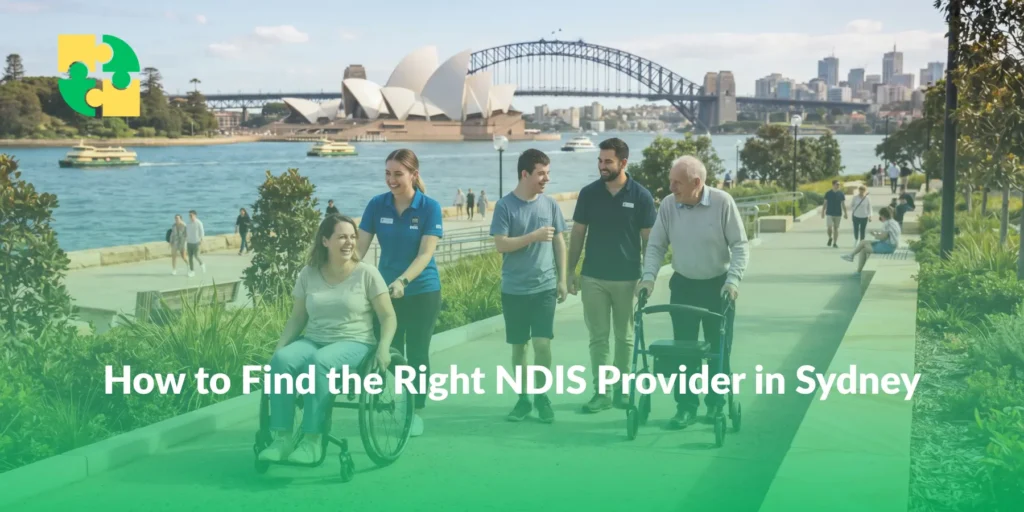
Finding the right NDIS provider in Sydney starts with understanding what support you need, what your NDIS plan covers and which providers are suitable for your situation. You should compare a few providers, check their experience and registration, ask about prices and availability, and speak with them before making your final decision.
In simple terms, the process is:
- Understand your needs
- Check your NDIS plan
- Search for providers
- Shortlist your options
- Check registration and experience
- Compare costs
- Ask questions
- Meet the provider
- Review the service agreement
- Start your support.
With so many NDIS providers operating across Sydney, choosing one can initially feel confusing. But once you know what to look for, the process becomes much easier.
Let’s go through it step by step.
What Is an NDIS Provider?
An NDIS provider is a person, business or organisation that delivers disability-related support to NDIS participants.
Depending on your individual needs and plan, providers may offer services such as:
- Personal care
- Assistance with daily activities
- Community participation
- Support coordination
- Occupational therapy
- Physiotherapy
- Speech pathology
- Behaviour support
- Assistive technology
- Supported independent living
- Short-term accommodation
- Other disability-related services
Not every provider offers the same services. That’s why it is important to find a provider that offers the specific support you need, rather than simply choosing a provider because they have good reviews or a large website.
The NDIS recommends researching providers, checking reviews and asking people you trust for recommendations. Your NDIS contact, support coordinator or recovery coach may also be able to help you find suitable providers.
Why Is Choosing the Right NDIS Provider Important?
Your provider can become an important part of your everyday life.
For example, a support worker might regularly visit your home, help you with daily activities or accompany you when participating in your community. A therapist may work with you over a longer period to help you develop skills and work towards your goals.
That’s why the cheapest provider isn’t necessarily the best provider.
A good provider should:
- Listen to your needs
- Respect your choices
- Communicate clearly
- Understand your goals
- Provide reliable support
- Explain costs properly
- Treat you with dignity
- Make you feel comfortable asking questions
The right provider should work with you, rather than simply telling you what support you should receive.
Step 1: Understand What Support You Need
Before searching for providers in Sydney, think carefully about what you actually need.
Ask yourself:
- What type of support am I looking for?
- How often do I need it?
- Do I need support at home?
- Do I need help in the community?
- Do I need therapy?
- Do I need assistance with personal care?
- Do I need specialised equipment?
- Do I need a provider with experience in a particular area?
For example, someone looking for occupational therapy will need a different provider from someone looking for a support worker to assist with everyday activities.
The more clearly you understand your needs, the easier it will be to find suitable providers.
Step 2: Check Your NDIS Plan
Before contacting providers, look at your NDIS plan and understand what funding is available.
Your plan contains information about your approved support and funding.
You should know:
- What supports are funded
- How your funding is managed
- What your funding can be used for
- Whether there are restrictions that apply to particular supports
This is important because having NDIS funding doesn’t mean you can automatically use it for every service or product.
If you’re unsure about your plan, speak with your NDIS contact, support coordinator, recovery coach or another person who helps you understand your NDIS supports.
Step 3: Know How Your Funding Is Managed
Your NDIS funding management type can affect which providers you can use.
There are three main arrangements.
NDIA-Managed
If your plan is NDIA-managed, you generally need to use NDIS-registered providers for your support.
The provider also needs to be registered for the relevant type of support.
Plan-Managed
If your plan is plan-managed, you can generally choose registered or unregistered providers for many supports.
However, some supports have specific requirements and must be provided by registered providers.
Self-Managed
If you self-manage your funding, you generally have greater flexibility when choosing providers, subject to NDIS rules and any relevant exceptions.
Understanding your funding arrangement before you start searching can save you a lot of time.
Step 4: Search for NDIS Providers in Sydney
Sydney is a large city, so don’t limit your search to the words “NDIS provider Sydney.”
Try searching for providers that operate in your suburb or nearby areas.
For example, you might search for providers around:
- Parramatta
- Liverpool
- Blacktown
- Penrith
- Bankstown
- Ryde
- Chatswood
- Campbelltown
- Canterbury
- Sutherland
The NDIS Provider Finder can help participants search for registered providers using a suburb or postcode. It can also provide information such as contact details and the services offered.
Searching locally can be particularly useful if you need regular face-to-face support.
Step 5: Create a Shortlist
Don’t feel that you have to choose the first provider you find.
Instead, create a shortlist of around three to five providers that appear suitable.
For each provider, compare:
- Services
- Location
- Availability
- Experience
- Registration
- Pricing
- Staff
- Reviews
- Communication
- Cancellation policies
Having several options makes it easier to compare providers objectively.
Step 6: Check Their Experience
A provider may offer the service you need, but you should also consider their experience.
Ask:
“How much experience do you have providing this type of support?”
If you have specific support requirements, ask whether the staff who will work with you have relevant qualifications, training or experience.
For therapy services, for example, you may want to understand the qualifications of the professional providing the service.
A good provider should be able to explain its experience clearly without making unrealistic promises.
Step 7: Check NDIS Registration
Registration is particularly important if your plan requires you to use registered providers.
The NDIS Provider Finder can help you find registered providers.
You can also ask a provider directly:
“Are you NDIS registered, and are you registered for the support I need?”
If the answer is unclear, ask them to explain.
Don’t assume that every organisation advertising itself as an NDIS provider is registered for every type of support.
Step 8: Read Reviews
Reviews can help you understand other people’s experiences.
Look for patterns rather than focusing on one positive or negative review.
For example, do customers regularly mention:
- Good communication?
- Reliable staff?
- Respectful service?
- Frequent cancellations?
- Difficulty contacting the provider?
- Unexpected charges?
The NDIS recommends checking provider reviews as part of researching providers.
However, reviews shouldn’t be your only deciding factor.
A provider with fewer reviews may still be an excellent choice for your particular needs.
Step 9: Ask About Availability
A provider may offer exactly the service you need but have no availability.
Before choosing them, ask:
- When can you start?
- What days are available?
- What times can you provide support?
- Do you have staff in my area?
- What happens if my regular worker is unavailable?
- Do you have backup staff?
This is especially important if you need support at specific times.
A provider that cannot offer support when you need it may not be practical, even if its other services look excellent.
Step 10: Understand the Costs
Always discuss costs before starting services.
Ask the provider:
“How much will this support cost?”
You should also ask about:
- Hourly rates
- Travel charges
- Cancellation fees
- Minimum booking times
- Weekend rates
- Public holiday rates
- Other additional costs
The NDIS publishes pricing arrangements that provide guidance on prices for NDIS support. Participants and providers can negotiate appropriate prices, subject to the applicable NDIS rules and arrangements.
Don’t be afraid to ask for a complete explanation of the costs.
It’s much easier to understand pricing before services begin than to deal with unexpected charges later.
Step 11: Ask About Travel Costs
Travel can be particularly relevant when choosing a provider in Sydney.
If a provider needs to travel to your home or another location, ask whether travel costs apply.
Ask:
“Are there any travel charges, and how will they be calculated?”
Make sure you understand whether travel is included in the service price or charged separately.
A professional provider should explain these costs before you agree to the service.
Step 12: Meet the Provider
Before making your final decision, consider arranging an initial meeting.
The NDIS recommends setting up a meeting with a new provider before starting to work with them.
During the meeting, explain:
- What support you need
- Your preferences
- Your goals
- What you expect from the service
- Any concerns you have
Pay attention to how the provider communicates with you.
Do they listen?
Do they answer your questions?
Do they respect your choices?
These things can tell you a lot.
Questions to Ask an NDIS Provider
If you’re not sure what to ask, use this checklist.
About the service
- What exactly does the service include?
- How will you support my goals?
- How often can you provide the service?
- Who will provide my support?
About staff
- What experience do your staff have?
- Can I meet the person who will support me?
- What happens if my usual worker is unavailable?
About pricing
- What is your hourly rate?
- Are there travel costs?
- Are there cancellation fees?
- Are there any other charges?
About communication
- Who should I contact if I have a problem?
- How quickly do you respond to questions?
- How can I make a complaint?
About flexibility
- Can I change my support arrangements?
- Can I request a different support worker?
- What happens if I want to change providers?
Asking these questions can help you avoid misunderstandings later.
Step 13: Review the Service Agreement
Once you’ve decided to work with a provider, you may be given a service agreement.
This document explains what you and the provider have agreed to.
It may include:
- Services provided
- Costs
- Payment arrangements
- Appointment schedules
- Travel charges
- Cancellation rules
- Responsibilities
- Complaint procedures
- How the agreement can be changed or ended
The NDIS recommends having a written service agreement when starting with a new provider, although it isn’t required in most situations. Written service agreements are mandatory for specialist disability accommodation.
Don’t Sign Anything You Don’t Understand
Take your time to read the agreement.
Make sure you understand:
- What you’re agreeing to
- How much you will be charged
- How often services will be delivered
- Cancellation arrangements
- Travel charges
- How to raise concerns
- How you can end the agreement
If something doesn’t make sense, ask the provider to explain it.
You can also ask a trusted family member, friend, support coordinator or recovery coach to help you understand the agreement.
What Are the Signs of a Good NDIS Provider?
The right provider should make you feel respected and involved.
Look for a provider that:
Communicates clearly
They explain services, costs and policies in a way you can understand.
Respects your choices
You should have a say in the support you receive.
Understands your goals
Your support should be connected to what you want to achieve.
Is reliable
They provide services as agreed and communicate if circumstances change.
Is transparent
They explain costs and additional charges before services begin.
Is flexible
They listen when your needs or preferences change.
Takes concerns seriously
They should have a clear process for dealing with complaints and problems.
NDIS Provider Red Flags to Watch For
There are also signs that should make you stop and think before choosing a provider.
Be cautious if a provider:
- Pressures you to sign immediately
- Refuses to explain costs
- Makes unrealistic promises
- Doesn’t listen to your preferences
- Is unclear about the service
- Adds unexpected charges
- Frequently cancels appointments
- Avoids answering reasonable questions
- Makes you uncomfortable
One small issue doesn’t necessarily mean a provider is unsuitable. However, repeated problems should be taken seriously.
Can You Change Your NDIS Provider?
Yes. You don’t generally have to stay with the same provider forever.
If the service isn’t meeting your needs, you can explore other options.
Before changing providers, check your service agreement and understand whether you need to provide notice or follow any cancellation arrangements.
The NDIS confirms that participants can change providers if they want to.
Remember, choosing a provider is not a decision you have to get perfect on the first try.
A Simple Example of Choosing an NDIS Provider in Sydney
Imagine Sarah lives in Western Sydney and needs regular assistance with daily activities and community participation.
First, Sarah checks her plan
She confirms that she has funding available for the type of support she needs.
Next, she searches locally
She looks for providers operating in her suburb and nearby areas.
Then, she creates a shortlist
Sarah finds four providers offering similar services.
She compares them
She checks their experience, availability, registration, reviews and prices.
She asks questions
Sarah contacts the providers and asks about staff, travel costs and cancellation policies.
She meets her preferred provider
During the meeting, Sarah explains her goals and preferences.
She reviews the service agreement
Sarah makes sure she understands the costs and terms before agreeing.
Finally, she starts the support
Sarah begins receiving services and monitors whether the provider is meeting her needs.
If the arrangement doesn’t work, she can explore other provider options.
Quick Checklist for Choosing an NDIS Provider
Before choosing a provider, ask yourself:
- Does this provider offer the support I need?
- Do they operate in my area?
- Do they have suitable availability?
- Do they have relevant experience?
- Do I need a registered provider?
- Are their prices clear?
- Are there travel or cancellation charges?
- Have I checked reviews?
- Have I spoken with the provider?
- Do I feel comfortable with them?
- Have I read the service agreement?
- Do I understand how to raise a complaint?
- Can I change providers if the service isn’t suitable?
If you can answer these questions confidently, you’re in a much better position to make your decision.
Conclusion
Finding the right NDIS provider in Sydney doesn’t have to be difficult.
The key is not to rush your decision.
Start by understanding your own support needs and checking what your NDIS plan covers. Then search for providers in your local area, create a shortlist and compare their services, experience, availability and pricing.
Don’t be afraid to ask questions. Ask about staff, costs, travel, cancellations and what happens if something goes wrong.
Most importantly, choose a provider that respects your choices and understands your goals.
Remember that the “best” NDIS provider isn’t necessarily the biggest or cheapest one. The best provider is the one that is reliable, suitable for your needs, transparent about costs and comfortable for you to work with.
If you’re unsure where to begin, the official NDIS Provider Finder can help you locate registered providers, while your NDIS contact, support coordinator or recovery coach may also be able to help you understand your options.
NDIS rules and pricing arrangements can change, so always check the latest official NDIS information before making important decisions about your plan or support.
FAQs
1. How do I find an NDIS provider in Sydney?
You can search the NDIS Provider Finder, ask for recommendations, and compare providers based on your needs, location and available services.
2. How do I choose the right NDIS provider?
Compare their experience, services, availability, pricing and reviews. Choose a provider that understands your needs and respects your choices.
3. Do I need an NDIS-registered provider?
It depends on how your NDIS plan is managed and the type of support you need. Some supports require registered providers.
4. Can I change my NDIS provider?
Yes. If your provider isn’t suitable, you can generally choose another provider. Check your service agreement for any notice requirements.
5. What should I ask an NDIS provider before choosing them?
Ask about their experience, services, availability, pricing, travel costs, cancellation policy and how they handle complaints.