

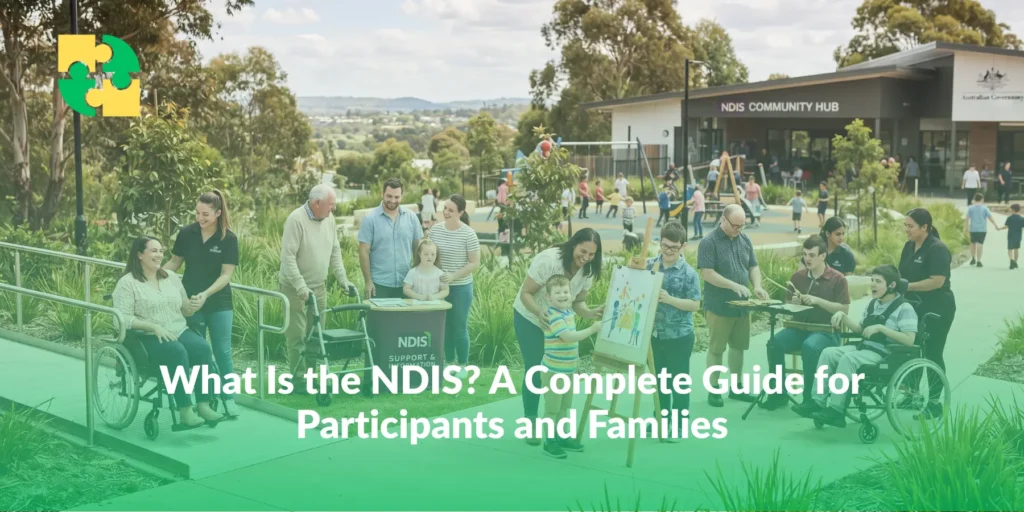
The National Disability Insurance Scheme (NDIS) is an Australian government scheme that provides funding and support to eligible people with disability. If you meet the eligibility requirements, the NDIS can help fund supports that make everyday life easier, build independence and help you work towards your personal goals.
But if you’re new to the NDIS, understanding how everything works can feel confusing.
You may be wondering:
Who can get NDIS funding?
What does NDIS funding actually pay for?
How do I apply?
Who manages the money?
And what does the NDIS mean for my family?
Let’s break it all down in simple terms.
What Does NDIS Stand For?
NDIS stands for National Disability Insurance Scheme.
The scheme is run by the National Disability Insurance Agency (NDIA). In simple terms, the NDIS is the scheme, while the NDIA is the organisation responsible for running it.
The purpose of the NDIS isn’t simply to provide people with money.
The bigger goal is to help eligible people access the right support so they can become more independent, develop skills, participate in their community and work towards the things that matter to them.
Depending on their individual needs, a participant may receive support with daily activities, skill development, community participation, assistive technology and other disability-related needs.
Every participant is different, so there isn’t one standard NDIS plan that works for everyone.
Who Is the NDIS For?
The NDIS is for people who meet the relevant eligibility requirements.
The main requirements relate to:
- Age
- Australian residency
- Disability or impairment
- Early intervention needs
Generally, you need to be 0 to 64 years old when you apply, live in Australia and meet the relevant residency requirements.
You must also meet either the disability requirements or the early intervention requirements.
Simply having a disability or medical diagnosis does not automatically mean someone will qualify.
The NDIS looks at the person’s individual circumstances and how their impairment affects their everyday life.
What Are the NDIS Disability Requirements?
For the disability requirements, the NDIS looks at whether a person’s impairment is permanent or likely to be permanent.
It also considers whether the impairment substantially affects their ability to perform everyday activities and whether they are likely to need disability-related support for their lifetime.
The impact may be seen in areas such as:
- Everyday activities
- Communication
- Mobility
- Work
- Study
- Social participation
- Independence
You may also need evidence from a doctor, specialist or other treating professional to help explain your impairment and how it affects your life.
This is why a diagnosis alone doesn’t necessarily guarantee NDIS access.
The NDIS considers the impact of the impairment, not simply the name of the condition.
Can Children Get NDIS Support?
Yes. Children can access the NDIS when they meet the relevant requirements.
Early intervention is an important part of the NDIS, particularly for children who may benefit from support at an early stage.
The NDIS has an early childhood approach for children younger than 9 and their families.
The focus isn’t only on what a child can or cannot do today.
Early intervention also considers whether the right supports could:
- Improve the child’s functional capacity
- Reduce future support needs
- Improve their development and independence
- Prevent their situation from getting worse
For parents, this can be an important difference.
Instead of only asking:
“Does my child need support right now?”
It can also be helpful to ask:
“Could the right support now make a meaningful difference to my child’s future?”
What Does the NDIS Actually Pay For?
This is one of the most common questions people have when they first learn about the NDIS.
NDIS funding is designed to pay for eligible NDIS supporters that meet the relevant rules and are included or allowed under a participant’s plan.
The support one participant receives may be very different from another participant.
Depending on individual circumstances, funding may support areas such as:
- Daily living
- Personal support
- Independence
- Skill development
- Community participation
- Assistive technology
- Disability-related supports
However, NDIS funding isn’t general household money.
You can’t simply use it for anything you want.
The support needs to meet the relevant NDIS requirements.
What Does “Reasonable and Necessary” Mean?
You’ll hear the words “reasonable and necessary” quite often when dealing with the NDIS.
In simple terms, a support generally needs to meet certain criteria before it can be funded.
It should:
- Relate to your disability
- Help you work towards your goals
- Support participation in areas such as work, study or social activities
- Provide value for money
- Be effective and beneficial
- Work appropriately alongside other supports and services
- Be an NDIS support or an approved replacement support
There are also things the NDIS generally doesn’t fund.
These can include ordinary day-to-day living expenses, supports that should reasonably be provided by another system, or supports that don’t meet the relevant NDIS criteria.
This is why having funding in your plan doesn’t automatically mean you can spend that money on anything.
What Is an NDIS Plan?
If you’re accepted as an NDIS participant, you’ll receive an individual plan.
Your plan explains your goals, funded supports, available budgets and how your funding will be managed.
Every plan can look different because every participant has different circumstances and support needs.
Your plan may include different support budgets, and some funding can be more flexible than other funding depending on how it is described.
Think of your plan as a roadmap for your NDIS support.
It helps you understand:
What support has been funded?
How much funding is available?
What goals are you working towards?
How will your funding be managed?
Understanding these details can help you avoid mistakes when using your funding.
What Are the Different NDIS Funding Budgets?
Depending on your circumstances, your NDIS plan can include different support budgets.
Current NDIS plans can include up to four main funding categories:
- Core
- Capacity Building
- Capital
- Recurring
Not all participants will have all four budgets.
Some funding may be flexible, while other funding may be allocated for a particular purpose.
This is why you shouldn’t assume that money available in one part of your plan can automatically be used for something completely different.
If you’re unsure whether a particular support can be purchased with your funding, check your plan or speak with your plan manager, support coordinator or NDIS contact.
Who Manages NDIS Funding?
There are three main ways NDIS funding can be managed.
Self-Managed
With self-management, you are responsible for paying providers and making claims for eligible expenses.
This can give you greater choice and control, but it also means you need to keep good records and monitor your spending.
Plan-Managed
With plan management, a registered plan manager handles provider invoices and payments.
You still choose the providers and supports you want.
Plan management can be useful for people who want more flexibility without having to handle every payment themselves.
NDIA-Managed
With NDIA management, the NDIA pays registered providers for eligible support.
You still generally have choice over which providers you use.
The important point is that the way your funding is managed doesn’t mean someone else makes all your decisions for you.
Can You Choose Your Own NDIS Providers?
Yes.
Participants generally have the freedom to choose the providers they want to work with and can change providers if their current provider isn’t meeting their needs.
When choosing a provider, consider things such as:
- Their experience
- Their communication
- Their availability
- Their pricing
- Whether they understand your needs
- Whether you feel comfortable working with them
A provider may have good reviews or experience, but that doesn’t automatically mean they are the right fit for you.
The right provider should understand your needs and communicate clearly.
How Do You Apply for the NDIS?
If you think you may be eligible, you can contact the NDIS or an appropriate NDIS partner to find out how to apply.
You’ll need to provide information and evidence to support your application.
The evidence should help explain your disability or impairment, how it affects your everyday life and why you may meet the relevant NDIS requirements.
If you’re unsure about what evidence you need, you don’t have to work everything out yourself.
An NDIS partner can help explain the process and what information may be required.
What Happens After You Become an NDIS Participant?
Once you’ve been accepted as an NDIS participant, you’ll move into the planning stage.
Your plan is based on your individual circumstances, goals and disability-related support needs.
You’ll discuss the areas of life where you need support and what you’d like to achieve.
Once your plan is approved, the NDIS can also offer a plan implementation meeting with your NDIS contact.
This meeting can help you understand your plan and start using your funding correctly.
And remember, it’s completely okay to ask questions.
If something doesn’t make sense, simply say:
“Can you please explain this part of my plan?”
You don’t need to understand every NDIS term immediately.
What Is a Plan Implementation Meeting?
A plan implementation meeting is offered when a new plan is approved.
The purpose is to help you understand your plan and begin using your support.
You can use the meeting to ask about:
- Your funded supports
- Your budgets
- How your funding is managed
- Choosing providers
- Using your plan
- Any questions or concerns you have
You don’t have to attend the meeting, but it can be helpful if you’re new to the NDIS or your plan has recently changed.
What Role Does Family Play in the NDIS?
Families can play a very important role in a participant’s NDIS journey.
For children, parents and carers are often involved in appointments, communicating with providers and helping with everyday support.
Family members may also help participants understand their plans, organise services and keep track of important information.
However, the participant’s own goals, preferences and choices should remain at the centre of decision-making wherever possible.
The NDIS is designed around the individual.
Family support can be valuable, but the participant’s needs and goals remain the main focus.
Can the NDIS Connect You With Other Services?
Yes.
The NDIS isn’t the only source of support for people with disabilities.
Even if someone doesn’t qualify for individual NDIS funding, the NDIS can still help connect people with community and mainstream services.
These may include:
- Community organisations
- Schools
- Sporting groups
- Support groups
- Libraries
- Health services
- Other mainstream services
This is important because not every disability-related need is supposed to be funded by the NDIS.
Different government, community and mainstream services can have different responsibilities.
What Happens If You Aren’t Eligible for the NDIS?
Being found ineligible for the NDIS doesn’t necessarily mean you have no support options.
NDIS partners can help people understand what other community and mainstream services may be available in their area.
So if you’re not eligible, don’t stop at:
“I can’t get NDIS funding.”
Ask:
“What other support is available to me?”
There may be other services or organisations that can help with your needs.
What Changes Are Happening to NDIS Planning?
The NDIS continues to make changes to its planning processes.
Current NDIS information says a new planning approach is being developed, including support needs assessments, with rollout planned from April 2027.
The NDIS says these assessments are intended to help create fairer and more consistent budgets and reduce some of the burden associated with gathering reports.
Because NDIS rules and processes can change, it’s always a good idea to check current official information rather than relying only on an old article, social media post or advice from someone whose circumstances are different from yours.
A Simple Way to Understand the NDIS
If the NDIS feels complicated, break it down into five basic steps.
1. Check Your Eligibility
Find out whether you meet the NDIS age, residency and disability or early intervention requirements.
2. Apply
Provide the information and evidence needed to support your application.
3. Create your plan
Discuss your circumstances, goals and disability-related support needs.
4. Use Your Funding
Choose suitable providers and use your funding for eligible NDIS support.
5. Review And Adjust
Your plan and support may be reassessed when appropriate, particularly if your circumstances or support needs change.
You don’t need to understand everything on your first day.
Just focus on the next step in front of you.
Important Things Every New NDIS Participant Should Remember
If you’re starting your NDIS journey, keep these points in mind:
- Your NDIS plan is individual to you.
- Having funding doesn’t mean you can spend it on anything.
- Understand your different funding budgets.
- Keep track of your spending.
- Ask questions when something isn’t clear.
- Choose providers carefully.
- Keep important documents and records.
- Ask for help when you need it.
- Check current NDIS information because rules and processes can change.
Most importantly, don’t be afraid to ask questions.
The NDIS can be complicated, even for people who have been using it for years.
Conclusion
The NDIS can feel overwhelming when you first start learning about it.
There are eligibility requirements, funding budgets, plans, providers, management options and plenty of new terms to understand.
But the basic idea is much simpler.
The NDIS provides funding to eligible people with disability for appropriate support that can help with everyday life, build independence and work towards personal goals. It can also connect people with community and mainstream services when individual NDIS funding isn’t available.
You don’t have to understand everything straight away.
Start with the basics.
Check your eligibility.
Understand your plan.
Know your funding.
Choose the right supports.
And ask for help when something doesn’t make sense.
For participants and families, understanding how the NDIS works can make the whole process feel much less confusing.
Because once you understand how the different pieces fit together, you’re in a much better position to make informed decisions and find the support that is right for your circumstances.
FAQs
1. What is the NDIS in simple words?
The NDIS is Australia’s national disability scheme. It provides funding to eligible people with disabilities for appropriate support that can help with everyday life, independence and personal goals.
2. Who can apply for the NDIS?
Generally, people need to meet requirements relating to age, Australian residency and disability or early intervention needs. You generally need to be aged 0 to 64 when you apply.
3. Does having a disability automatically qualify someone for the NDIS?
No. A person must meet the relevant NDIS eligibility requirements. The NDIS considers the person’s impairment, how it affects everyday life and their likely long-term support needs.
4. What can NDIS funding be used for?
NDIS funding can be used for eligible NDIS supporters that meet the relevant rules and criteria. The supports available depend on the participant’s individual circumstances, disability-related needs and goals.
5. Who manages NDIS funding?
NDIS funding can be self-managed, plan-managed or NDIA-managed. The management type determines how payments are handled, while participants generally have choice over their providers and supports.