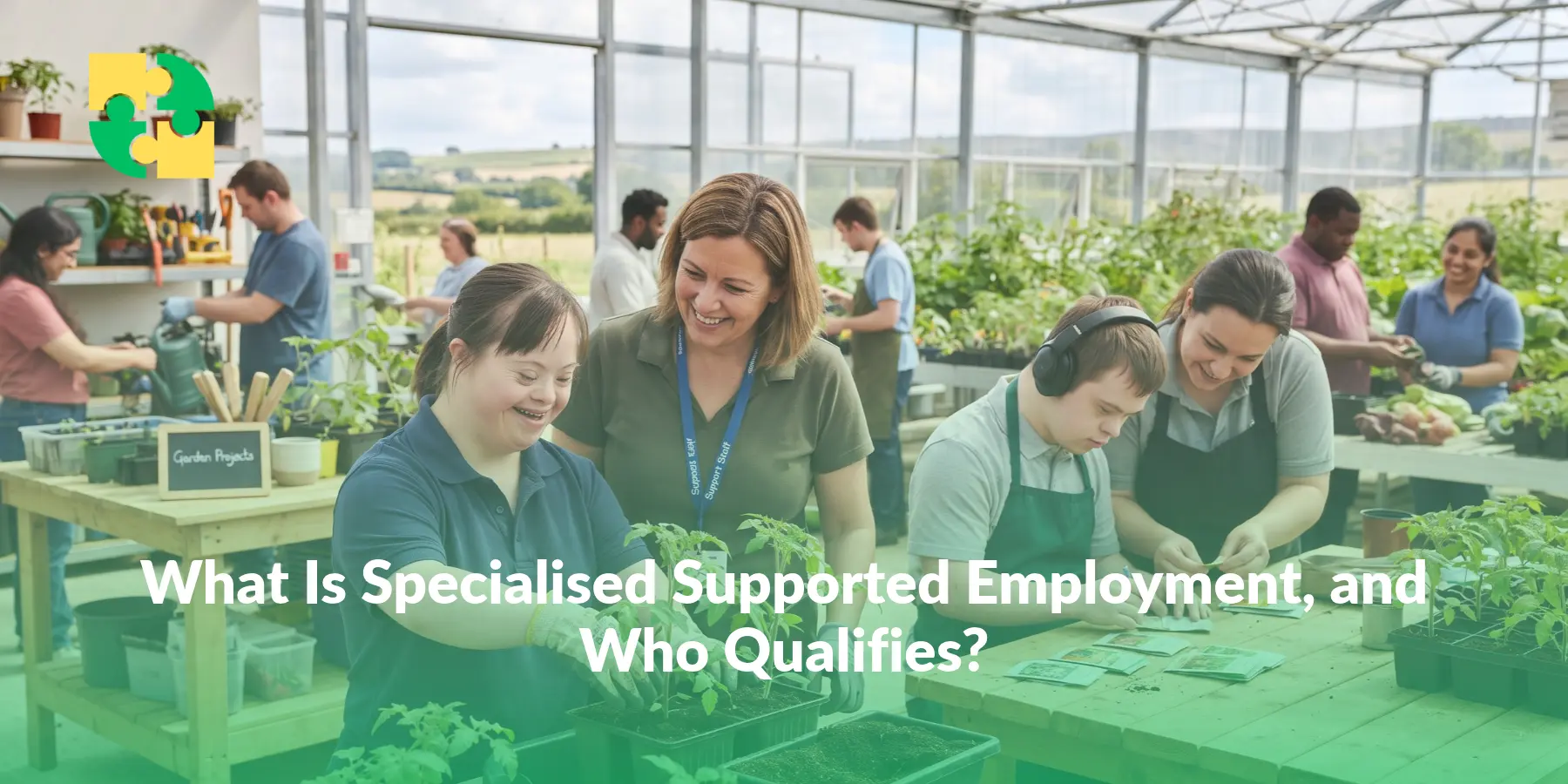




Specialised Supported Employment is paid work for people with disability who need substantial, ongoing support to obtain or keep a job. The support is tailored to the individual and may be provided in different workplace settings. In Australia, eligible NDIS participants may receive funding for employment support through their NDIS plan, subject to the applicable funding rules. Having an NDIS plan does not automatically guarantee a place with a particular provider.
What Is Specialised Supported Employment?
Specialised Supported Employment is a type of employment support for people with disability who need more than occasional help at work. The aim is to provide support that matches a person’s abilities, goals, and individual needs.
Many services are delivered by organisations traditionally known as Australian Disability Enterprises (ADEs). These organisations may operate businesses in areas such as recycling, packaging, laundry, maintenance, and hospitality.
“Specialised Supported Employment” is also an NDIS provider registration category. You can use the official NDIS Provider Finder to search for registered providers under this category.
Depending on the provider, support may include:
- Paid work matched to your skills and interests
- On-the-job training and skill development
- Support staff to help with daily work tasks
- Help working towards personal goals, such as building confidence or trying new roles
- Assistance with workplace routines, communication, and problem-solving
Supported employment is not limited to one type of workplace. Depending on individual goals and circumstances, options may include supported employment services, social enterprises, micro-businesses, or mainstream employment.
Who Qualifies for Specialised Supported Employment?
Eligibility depends on your support needs, funding arrangements, and the provider’s requirements. These are the main factors to consider.
1. You need substantial, ongoing support.
This is the main focus of supported employment. It is intended for people with disabilities who need significant ongoing assistance to obtain or maintain paid work. If occasional help or workplace adjustments are enough, another employment service may be more suitable.
2. You may be able to access support through the NDIS.
If you are eligible for the NDIS, employment supports may be funded through your plan when they meet the applicable funding rules. NDIS eligibility has its own requirements, and having a plan does not automatically mean every employment service will be funded.
3. The provider’s own requirements may apply.
Requirements can vary between providers. Some may consider age, the type of work available, support needs, transport arrangements, or other practical factors. Ask the provider directly about its current entry criteria rather than assuming every service has the same rules.
4. If you’re not eligible for the NDIS, there may still be options.
The Australian Government’s Disability Employment Continuity of Support (DECoS) program funds support for certain people who are ineligible for the NDIS but were previously funded under the older Disability Employment Assistance program. This is a specific programme, not a general alternative available to everyone.
Having a disability does not automatically guarantee a place. Confirm the current criteria with the provider and the relevant government programme.
Is Specialised Supported Employment Paid?
Yes, supported employment is paid work. However, wages and conditions can vary depending on the role and the applicable workplace arrangements and laws.
Before you start, ask the provider:
- What your wages and working hours would be
- How your wage is calculated or assessed
- Which award or employment conditions apply
- Whether any costs apply to the service
- How working might affect payments such as the Disability Support Pension
This is different from employment assistance that helps you prepare for a job or find an employer but does not employ you directly.
What Is the Difference Between Specialised Supported Employment and Disability Employment Services?
People often confuse the two.
- Inclusive Employment Australia (formerly Disability Employment Services) helps eligible people with disability, injury, or health conditions prepare for work, find jobs, and maintain employment. Support may include job searching, CV and interview preparation, workplace assistance, and help for employers.
- Specialised Supported Employment is intended for people who need substantial, ongoing support to obtain or maintain paid work. Support is tailored to their needs and may be delivered within a supported employment service or another suitable workplace.
Neither option is automatically better. The right choice depends on your support needs, employment goals, and the services available to you.
Is It Funded Through the NDIS?
In some cases, yes. If a person is eligible for the NDIS, employment-related supports may be funded through their NDIS plan when the supports meet the applicable funding rules.
Supported employment funding may be used in different workplace settings, including mainstream employment, social enterprises, micro-businesses, and supported employment services. However, not every employment service or job-search activity is funded through the NDIS.
Before making decisions, confirm your funding arrangements with the NDIA, your support coordinator, or the provider.
Are These Services Regulated?
Registered NDIS providers must meet the registration requirements and standards that apply to their services. Supported employment services are subject to relevant NDIS quality and safeguarding requirements.
Before choosing a provider, it is still a good idea to visit in person, meet the team, ask about staff training, and understand how the service protects participants’ rights and responds to concerns.
How to Access Specialised Supported Employment
1. Talk about your goals.
Think about the type of work you’d enjoy, your skills, and the support you may need.
2. Check your NDIS plan.
Review the employment-related supports included in your plan. If you think additional support may be needed, discuss it with your support coordinator or the NDIA.
3. Speak with your support coordinator or planner.
They can help you understand your options and funding arrangements.
4. Find registered providers.
Use the “NDIS Provider Finder”
5. Contact a few providers.
Ask about eligibility, available work, wages, support levels, and any fees or other costs.
6. Visit before you decide.
If possible, arrange a visit and ask how the provider supports participants, develops skills, and responds to changing needs.
Benefits of Specialised Supported Employment
When it suits the individual, it can help people:
- Earn an income and build practical work skills
- Grow in confidence
- Receive workplace support suited to their needs
- Become part of a workplace community
- Explore different tasks and responsibilities
- Work towards longer-term goals, including open employment if they wish
Outcomes vary from person to person. The right support should reflect the individual’s preferences, abilities, and goals.
Conclusion
Specialised Supported Employment gives people with disability who need substantial, ongoing support an opportunity to undertake paid work with assistance tailored to their needs. Support may include workplace training, help with daily tasks, and opportunities to develop skills and work towards personal goals.
If you think you or someone you care about may qualify, start by reviewing the available employment supports, speaking with a support coordinator if you have one, and contacting registered providers.
Funding rules, eligibility requirements, and provider services can change. Confirm current details with the NDIS or the relevant provider before making decisions.
Frequently Asked Questions
What is Specialised Supported Employment?
It is paid work with tailored support for people with disability who need substantial, ongoing assistance to obtain or maintain employment.
Who qualifies?
People with disabilities who need substantial, ongoing employment support may be eligible. Access depends on individual circumstances, funding arrangements, and the provider’s requirements.
Does everyone with a disability qualify?
No. Eligibility depends on support needs and the relevant programme and provider criteria. Having a disability or an NDIS plan does not automatically guarantee access to a particular service.
Is it paid?
Yes, supported employment is paid work. Wages and conditions depend on the role and applicable employment arrangements. Ask the provider for details before starting.
Can the NDIS fund it?
The NDIS may fund eligible employment supports when they meet the applicable funding rules and the participant’s circumstances. Some people who are not eligible for the NDIS may receive support through DECoS if they meet that programme’s specific criteria.
Can I move to a regular job later?
It may be possible. Some people use supported employment to develop skills and confidence before moving into open employment, if that is their goal and a suitable opportunity is available.
How do I choose a provider?
Ask about eligibility, the type of work available, wages, support levels, staff experience, workplace safety, and how the service responds as your needs change. If possible, visit in person before deciding.